Stays
Babylonstoren
A Cape Dutch wine farm from 1692 in the Winelands: garden, kitchen, spa and cottages all following the land.
Stays
A Cape Dutch wine farm from 1692 in the Winelands: garden, kitchen, spa and cottages all following the land.
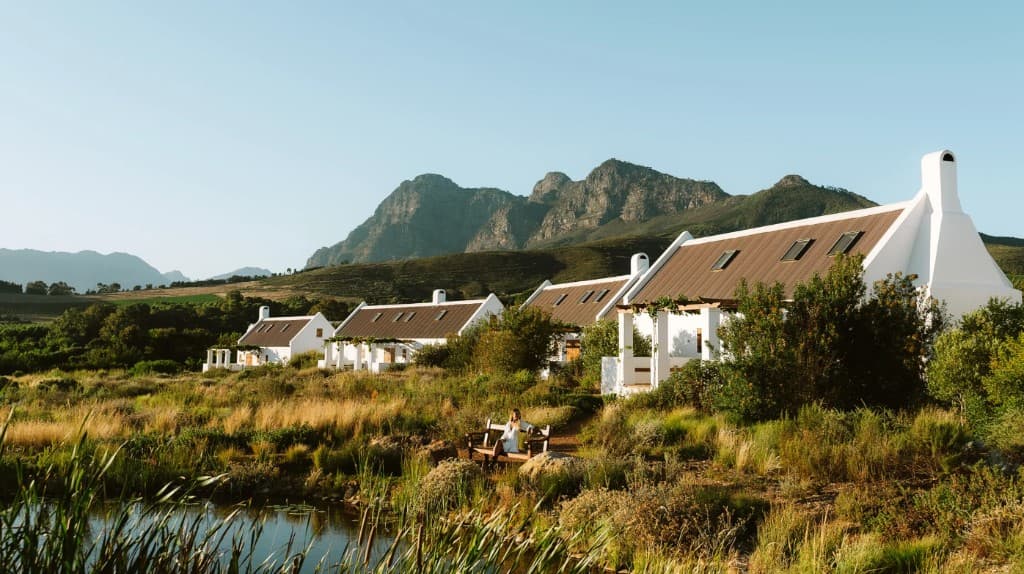
Babylonstoren is a fully functioning Cape Dutch wine farm in the Drakenstein Valley of the Cape Winelands, about an hour east of Cape Town, not a hotel planted on a farm. Founded in 1692, with a manor house from 1777, the estate has been owned since 2007 by Karen Roos and Koos Bekker. Since opening to guests in 2010, the whole stay has followed the seasons: gardens, kitchen, spa, cellar, and the day itself.
Writing for Condé Nast Traveller, the magazine put the place this way: “Is it a farm? A garden? A spa hotel? It’s all of the above. Since 2010, Babylonstoren has drawn day-trippers and luxury farm stay seekers to its sun-kissed swathe of land in the Cape Winelands, whitewashed Cape Dutch architecture, monumental gardens with incredible biodiversity, and delectable farm-to-table dining. Across its 1,070-hectare spread, holding everything from edible gardens to cheese rooms and wine cellars, the options to spend your time are near-endless. Our tip? Pick wisely for your first trip and plan to return for all the rest. Because you will want to return, mere minutes after you arrive.”
The farm’s own invitation is quieter still: “Above all, we’d like visitors to ground themselves again. To enjoy the mountains all around as much as we do, pick their own healthy fruit and veg, play pétanque, swim in the farm dam, enjoy an hour in the spa, eat a simple fresh dish at one of the restaurants, walk up the conical Babylonstoren hill, await sunset with a glass of wine in hand, and then slip in between sheets of crisp linen and drift away...”
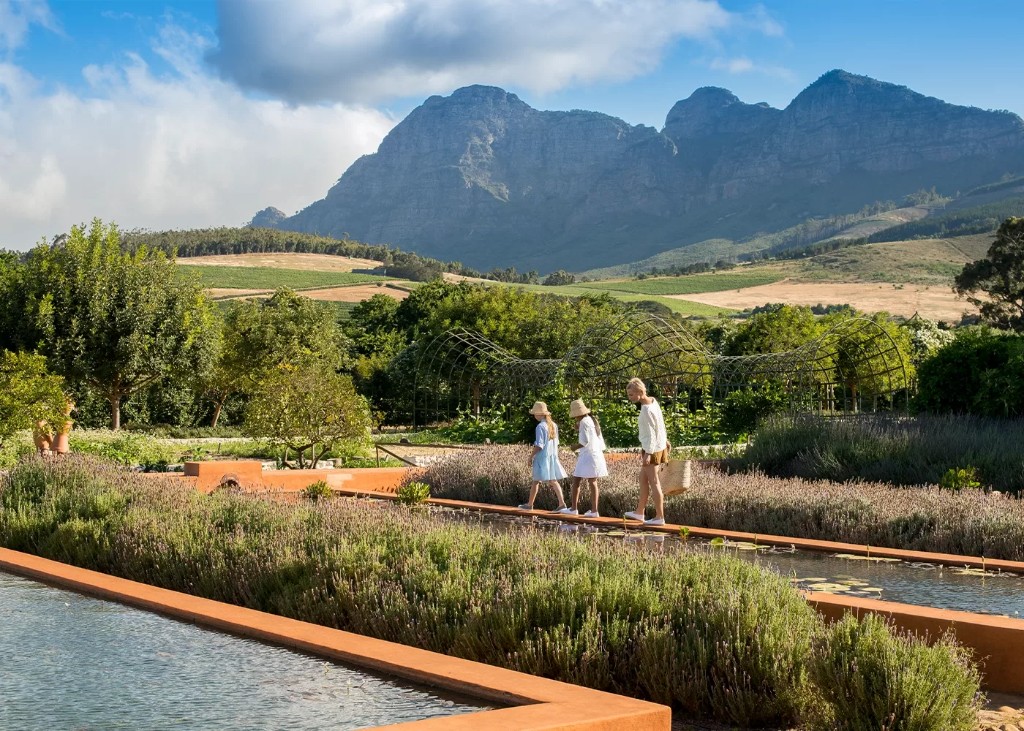
I was sitting under a pergola in the Drakenstein Valley about an hour east of Cape Town, watching the Simonsberg go from grey to violet the way mountains do in the late afternoon when they've decided to show off a little, and a young woman set a plate down in front of me and said only one word, which was "yellow." That was the whole description, and I have to tell you it's the finest piece of menu writing I've come across in years, because what she put down really was yellow: pumpkin roasted with honey and thyme, carrots no bigger than a child's finger, pineapple, persimmon, granadilla, a handful of gooseberries, a tangerine, and toasted coconut scattered over the top of all of it like snow falling on a country nobody has properly mapped. You can also order red, or green. That's the menu, more or less, written on a white tiled wall beside a painted bull's head in a room that used to be the cowshed, and I feel confident saying the cows never had it half this good.
The restaurant is called Babel, which tells you something about the place, and the farm is called Babylonstoren, which tells you rather more. There's a small hill behind the old whitewashed farmyard that somebody a few centuries ago decided resembled the Tower of Babel, and the name stuck the way names do when the person responsible is long dead and no longer available for argument. The farm itself has been going since 1692, the manor house went up in 1777 with its gables and its thatch and that plain, unfussy Cape Dutch beauty that never once flirts with you, and for the better part of three hundred years it was simply that: fruit, wine, work, weather.
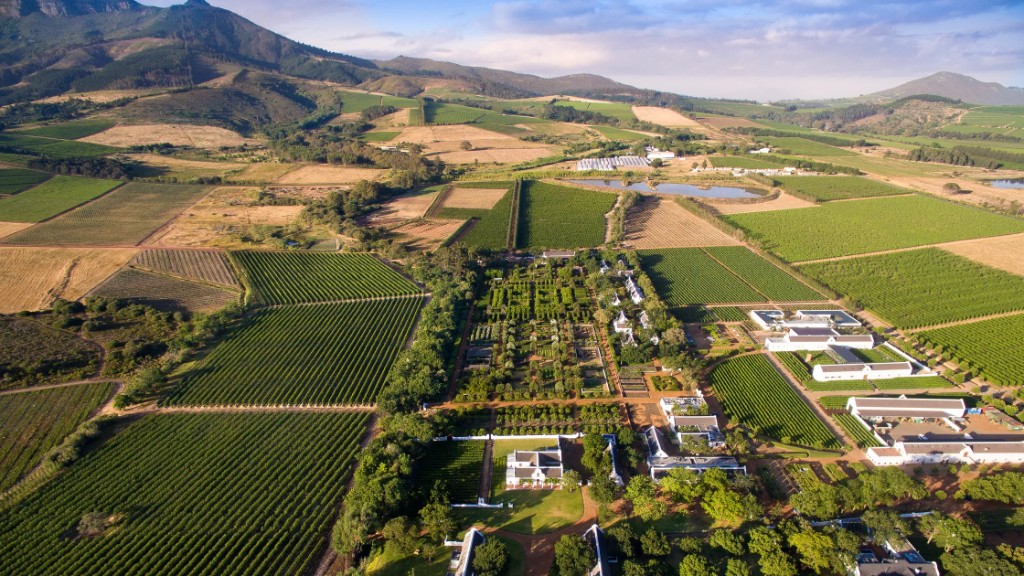
Then in 2007 a woman named Karen Roos, who used to edit a design magazine and clearly has never stopped thinking like one, bought the place with her husband and did something I find almost unreasonably moving, which is that before she built a single suite or spa or tasting room, she rang up a Frenchman. His name is Patrice Taravella, and his great work until then had been the rebuilding of a medieval cloister garden on the grounds of a twelfth-century priory in France, which is not a line you come across often on a résumé. She handed him eight acres and gave him one instruction that I would consider having tattooed somewhere discreet if I were a braver man: everything planted in it had to be edible or medicinal. Nothing merely decorative, nothing there just to be looked at. Three hundred varieties, every one of them useful, every one of them grown either to be eaten or to make somebody well.
So I spent the next morning walking through it with a cup of coffee, accomplishing nothing whatsoever, which remains the only correct way to spend a morning.
The paths are laid with crushed peach pits, which I'd like you to sit with for a moment, because it means somebody looked at an enormous pile of peach stones and thought, well, we'll walk on them, and the result is that the whole garden makes a sound underfoot like a fire settling. Water moves through the place entirely by gravity, running down stone channels into ponds where lotus grows alongside a little water flower the Afrikaners call waterblommetjies and then, quite sensibly, stew. There are nineteen varieties of peach and eleven kinds of fig, and I stopped in front of a fig tree in the heat and had to be spoken to twice, because my grandmother grew figs, or tried to, in a climate that had firm opinions on the matter, and every autumn there was an entire operation involving burlap and string and a good deal of swearing in two languages, and every August she would hand me one still warm and split open without saying anything at all, because what was there to say. And here I was at the bottom of Africa in front of the eleventh variety, feeling absurdly like a boy standing in somebody's back garden waiting to be handed something.
They have an apple tree descended from Newton's, and an olive brought from Gethsemane, and they'll mention both quietly and then move along, which I appreciated more than I can tell you. There's a lawn of Roman chamomile you're meant to cross barefoot so it gives up its scent, and I did, and it does, and I felt ridiculous, and then I went round again.
In the morning there are the ducks. They keep hundreds of Indian Runners, and every day a man opens a gate and marches the entire tribe out into the vineyards to eat the snails, and every afternoon he marches them back, and that is the whole of the pest control programme. No spray, no chemistry, just ducks going about their business at speed with the unearned confidence of a small brass band. I watched it twice and would happily have watched it every day for a year.
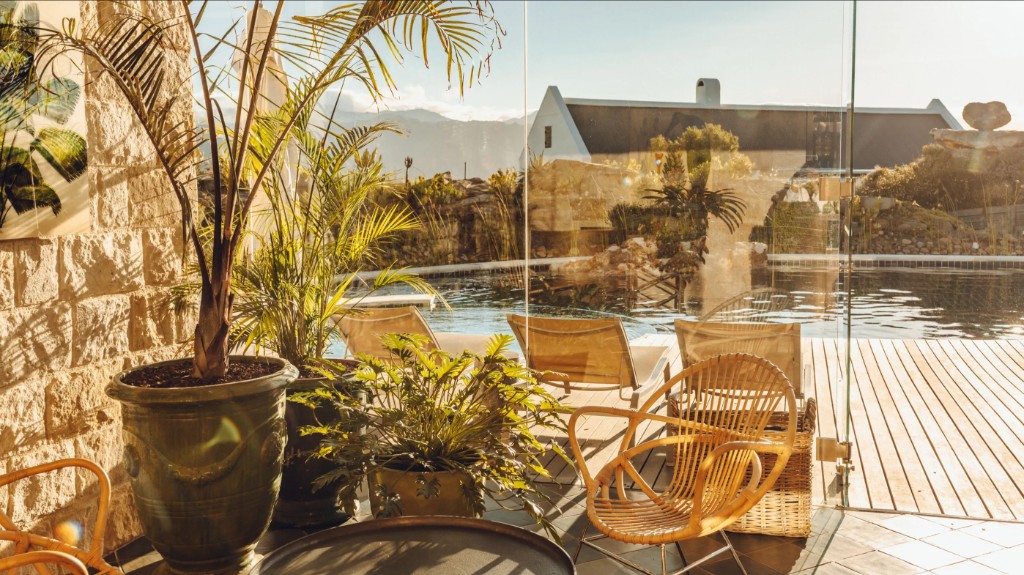
That, if you want to call it a trick, is the trick of the place. Nothing there is ornamental. The garden feeds the kitchen and the kitchen writes its menu that morning according to what came in through the door, the spa uses botanicals grown fifty paces from the table you're lying on, the grapes are outside the tasting room, the bread is baked close enough that you can smell it from the path, and the gelato exists largely because there is too much fruit, for which we should all be grateful. The whole estate is one organism, and for a couple of days you get to live inside it as a small, well-fed, entirely welcome parasite. You sleep in a whitewashed cottage with walls two feet thick and a fire laid for you, and the only news of the day arrives at dawn in the form of a guinea fowl saying something unrepeatable.
Here is what I actually wanted to say, and then I'll stop, because the salad is getting warm.
I've been writing lately about sanctuaries, and most of them come with a door, a rate card, and a pleasant man in a good suit quietly deciding who comes through it, because we seem to have accepted that peace is a luxury good and costs whatever they tell us it costs. Babylonstoren has a hotel too, and no, it isn't cheap, and I'm not going to pretend otherwise. But the garden is open to anyone who turns up at the gate. The entrance fee is a few rand, less than a cup of coffee, and what they collect goes into a trust for the community around the farm. Families arrive with children who pick berries straight off the bush and eat them there with the juice running down their chins, and nobody is vetted, and nobody is ranked, and nobody is made to feel they have wandered somewhere they don't belong.
They built one of the most beautiful gardens on the continent, and then they left the gate open. Which seems to me the better way round, because once you've been handed the fig, warm and split open and asking nothing of you, it becomes very difficult to understand the sort of person who would keep it to himself.
Sources: Condé Nast Traveller; Babylonstoren.