Stays
Selling What Isn't There
Why absence is the focal point of ultra-luxury hospitality today.
Stays
Why absence is the focal point of ultra-luxury hospitality today.
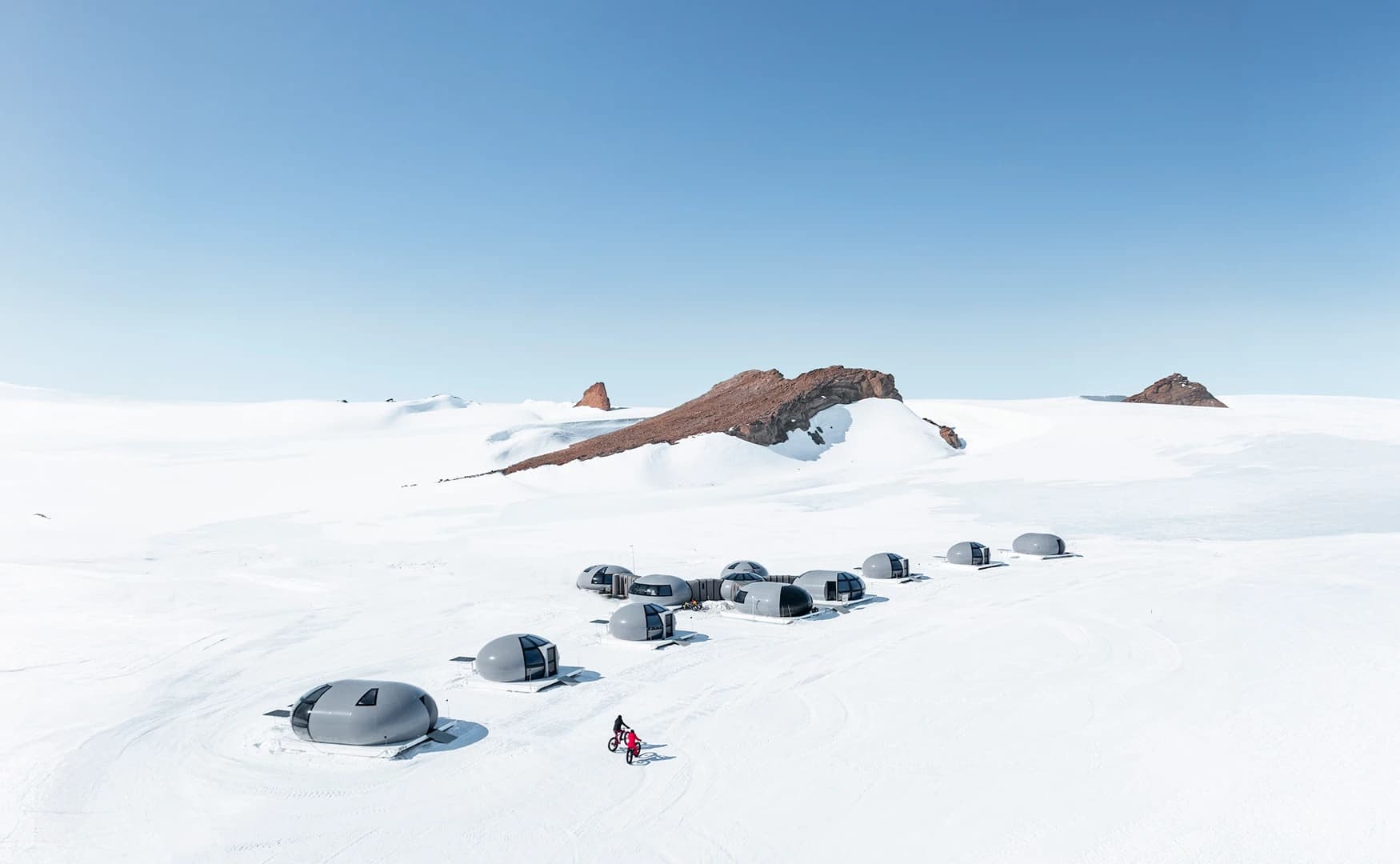
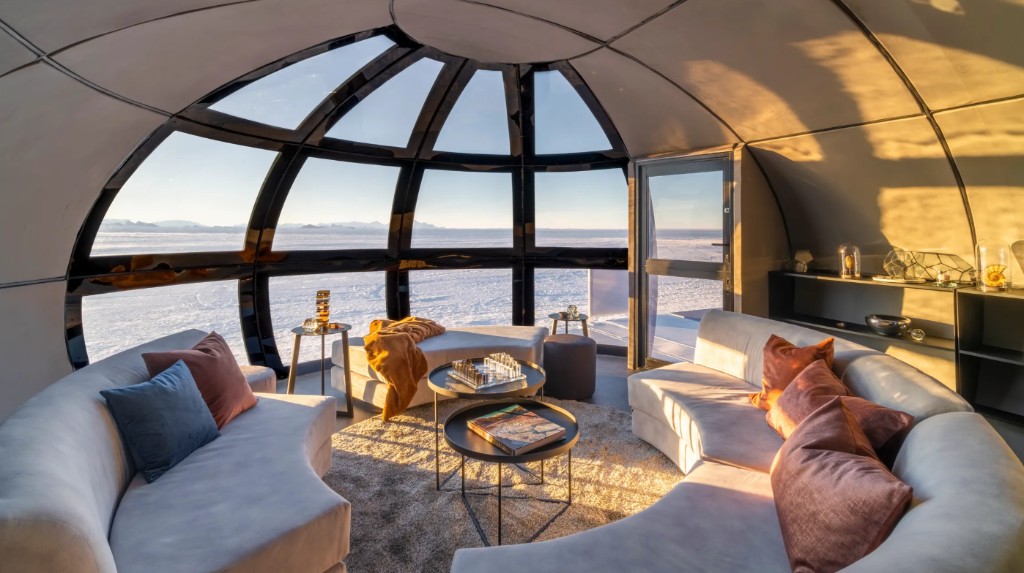
You wake up in a pod on what looks like the planet Hoth, presented with an intense expression of exotic nothingness, characterised by endless white glacial plateaus meeting uninterrupted polar light. It’s a very comfortable and contemporary glamorous pod, though. Condé Nast Traveler calls this experience a ‘one-of-a-kind, ultra-exclusive journey that could potentially outshine most—if not all—of your previous global pursuits.’
A few days ago, your chartered jet left Cape Town at one in the morning because the runway it was aiming for is made of ice and has to be frozen solid when the wheels touch down. The Airbus A340 that carried you was built for a crowd ten times the size. Upon landing, you were driven fifteen minutes across a glacier to six grey pods that look extraterrestrial.
This is Echo Camp, at 71°32'47" South in Antarctica. It sits 120 miles inland and 3,900 feet above sea level. There is no road to it and no harbour. The aircraft that brought you is the way out, and it can only leave when the meteorologists in Cape Town say the ice will hold.
Everything else at Echo is, by luxury standards, very good. There is a bar called the Observatory with an Anthony James sculpture glowing in it like a power source, and a dining pod called the Refueling Station where a Cape Town chef serves whatever the week's flights brought in. Guests ice-climb, abseil, zipline, fat-bike a groomed track or venture through the deep end of Earth’s most secluded continent. Condé Nast Traveler's Travis Levius called it "one of the world's most audacious eco-luxury projects". But better food, larger rooms, and warmer service in more beautiful buildings exist in hundreds of places. All for a fraction of the price. None of those are the reasons why anyone comes.
What those hundreds of places can’t sell is the absence of everybody else. That is Echo Camp’s primary product, and it requires guests to fork out much more than just a truck of cash.
Echo Camp is not actually empty. With a capacity of just twelve guests, managing it through the short season takes a team of about 120: pilots, runway crew, chefs, doctors, guides at a ratio of one for every four guests. But the idea is that there is no lobby, no queue, and no strangers.
The audience problem
Thorstein Veblen built this original theory on the opposite premise. In 1899 he explained that a household kept servants for "the evidence they afford of the master's ability to pay", and the whole apparatus only functioned in public. Livery existed to be looked at and footmen stood where visitors would frequently pass-by. A retinue nobody sees proves nothing about anyone, which is why Veblen's leisure class dressed its lackeys in costumes that made work impossible and then put them in the hall to be seen by everyone.
Echo pays for the same staff Veblen described, but then spends even more to keep them out of sight. The staff sleep in polar tents pitched behind the shared pods where no guest can see them. A hundred and twenty people work through the season so that twelve can look out at an absence.
By Veblen's rules this should not work. And Echo takes it a step further than just hiding its staff. This accommodation comes with no network. Guests may send text-only email from a single company iPad in the lounge, or buy credit for a satellite phone. The absence being sold at Echo extends past the physical world to the online one.
So there is no audience in Echo, and no way to send evidence from it. If anyone witnesses this purchase, they’ll do it before the plane leaves. Which is a problem because no one actually sees you wire that money over a phone call. By Veblen's account that should be enough to kill the display.
Unless money isn’t the only thing being transacted.
What money can’t buy
Robert Frank's Luxury Fever explains why having money alone stopped being enough. Frank's argument is that the goods people fight over are positional: their value comes from where they rank amongst others, not from anything they intrinsically are. And positional goods, he writes, are by their nature things in fixed supply.
Once enough people can fork out enough cash to pay for a six-figure holiday, those six figures stop distinguishing anybody, and the arms race has to find a scarcer input. Echo is transparent with its pricing. The South Pole & Penguins programme runs $115,500 a person. But look at what else it takes. There is no booking engine and no rate calendar; you send an enquiry and wait for someone to call you back. After a deposit, White Desert requires a medical check completed within thirty days of travel, and takes guests from age 10 to 85. After all that, timing comes into play.
South Pole & Penguins has six departures in the 2026-27 season. The first begins on 1 December 2026, the last ends on 12 January 2027, and each runs seven nights. The Long Stay, at $110,500, runs once: 26 January to 3 February 2027. 9 days in the year. If it does not suit you, you’ll have to wait another twelve months.
And even those dates are provisional. Guests must be in Cape Town two days before the scheduled flight and stay two days after the scheduled return, because the departure depends on the weather. One reviewer had his flight pulled forward by a day. So the real requirement is eleven days in peak summer, held loosely at a company's convenience.
That is the fixed supply Frank was describing, and it explains the guest list before anyone applies. A surgeon doesn’t have eleven floating days in January. Neither does a litigator in trial, nor a founder in the middle of an IPO. Frank's own account of the treadmill is that it made people work longer and see less of their families. Echo sells back exactly what the treadmill took. The people who can most easily afford a $115,500 week are frequently the people who have little flexibility over their calendar, and the camp is engineered so that you need that flexibility and freedom. Anyone who doesn’t have the peace of mind to disconnect from the outside won’t be eligible to experience this.
So who actually sees you spending?
Veblen's problem looks unsolvable here. Nobody watches you enjoy the week, but that’s not exactly where your spending gets seen.
Consider what it takes to board that plane. You send an enquiry and wait for a company to call you back. You sit in a doctor's office and have your heart certified. You choose one of six weeks if they haven’t booked up yet. Then you tell whoever depends on you that you will be unreachable for eleven days in January (which will probably be extended due to the weather).
Every one of those requires another person. Your assistant moves the meetings. Your colleagues absorb the fortnight. Your partner accepts a departure date nobody controls. Your doctor signs the form. Nobody here is being impressed. They are being inconvenienced. In December your colleague opens her calendar and finds four of your January meetings now being handled by her, with a note that the dates may still move. She works out what the trip costs you without being told, because part of the bill has landed on her desk.
Veblen's footman stood in the hall so that visitors would see him. Echo puts the rearrangement in your office in November, and the people who see it are your colleagues. Six weeks before you fly, when the trip is still nothing but a date in a calendar, everyone who was going to notice has noticed. Which leaves the week itself with no work to do, and yourself free to spend it in complete absence.
What visibility costs
Let’s juxtapose Echo with another ultra-luxury property. Amangiri shows what happens when the only barrier is money. Aman's 34-suite resort in southern Utah sells the same thing Echo does, a landscape with nobody in it. It’s not cheap either: suites start at $7,561 a night. A writer for Prestige soaked in the stone bath, then sat on the cushioned ledge of her private terrace with the fire lit, looking out at the vast mesa. A jackrabbit came into view, lingered outside the room, and wandered off into the open land. That was the moment, she wrote, when it struck her that she was in the middle of a vast wilderness. But that $7,561 price tag is the entire barrier. You can book the room a week in advance and arrive with no issues.
Kim Kardashian spent her birthday there in October 2017 and called it her "most relaxing" birthday trip in an Instagram post. The pool that curls around the sandstone escarpment is now among the most reproduced hotel images in the world. A guest who has paid for silence can find themselves standing in it while someone else finishes composing that shot, repositioning a hat and a glass, with a friend directing and shouting from the opposite end.
At first glance Amangiri should have held its value. Frank's rule is that a positional good has to be limited, and for a while it was. The resort opened in 2009 with thirty-four suites, and with the exception of a few tented pavilions, that number hasn’t changed.
The deeper problem is that the suite was never really what people were paying for. They were paying for the emptiness around it, and Amangiri doesn't own that. Horseshoe Bend is public land and anyone can drive to it. The tour buses at Antelope Canyon are not in the resort's control. So what Amangiri actually sells is a beautiful room with a view of a desert that belongs to everybody. Then there is the pool. Veblen's footman was not diminished by being looked at. The whole point of him was to be seen, and a hundred visitors cost the owner nothing. Emptiness does not work that way. Every photograph taken at that pool tells more people where to find the thing the guest paid for, and each one that arrives corrodes the emptiness that was once there.
Echo doesn’t have that problem, because it owns everything it’s selling. White Desert owns the runway and all transportation, so nobody can just sneak into Echo Camp. With just six pods, six dates in the season, an immense amount of administrative work, and the freedom to sacrifice eleven days to a weather forecast. No amount of attention can put a thirteenth person there.
An unmarked door
You could object that none of this is engineering. There is no hospital in Queen Maud Land, so of course there is a medical form. Ice must be rock solid to support an aircraft, so of course the dates change.
Then look at what Aman built in Manhattan, where nothing keeps anyone out.
Just two blocks from Central Park, Aman New York stands on the corner of Fifth Avenue and 57th Street. Yet nothing happens at street level. The lobby is fourteen floors up. By the time the doors open the city is beneath you.
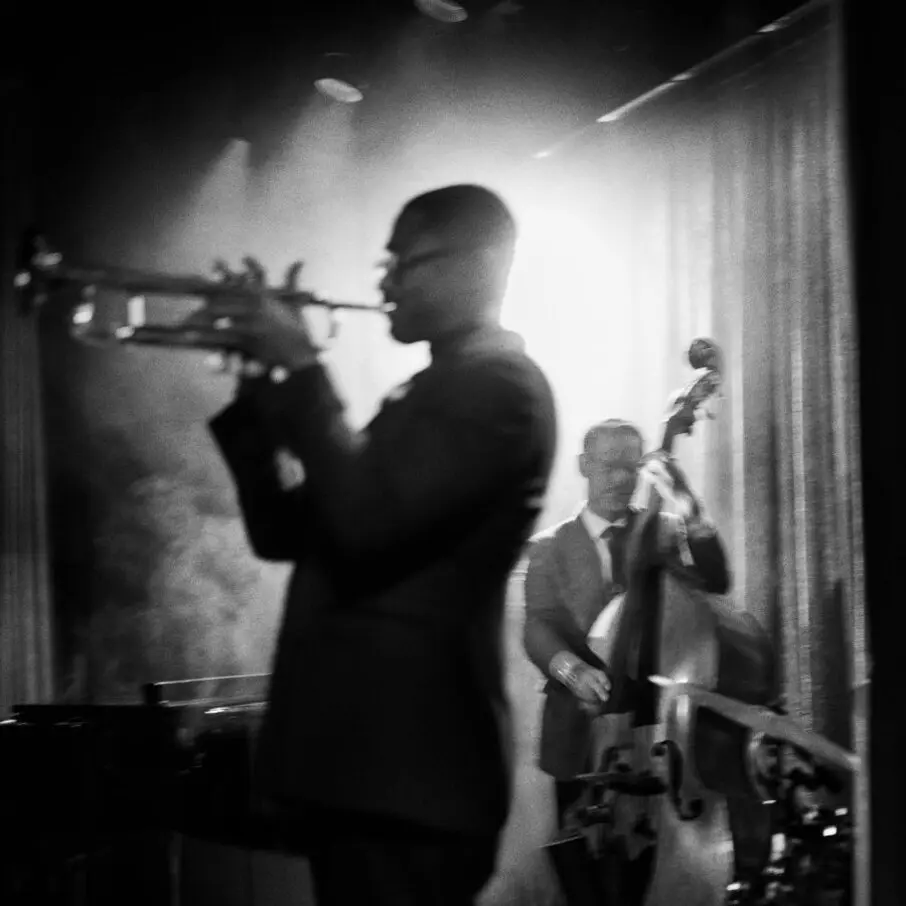
But let’s look at Aman’s Jazz Club, because everyone has access to it. There is no door on Fifth Avenue. The entrance is around the corner at 9 West 56th Street and it is unmarked. To use it you email for a reservation no earlier than thirty days ahead, and when you arrive a man behind a velvet rope checks your name against an iPad. One reviewer walked to the hotel lobby by mistake and had to be sent back around the block.
Nobody is excluded, but very few actually bother to go. Working it out just takes more effort than most people will spend on a Tuesday evening. It’s like the medical certificate again, rebuilt out of a side street and an email address.
Antarctica's geography gives Echo its own gate. Manhattan has none, so Aman built one out of a side street and an email address. Neither gate was built by accident: what you bought into was the absence of others. There’s a joke in the industry's name. Hospitality means welcoming the stranger, and the most expensive thing it makes is a machine for turning strangers away. The most valuable room on Fifth Avenue is the one you cannot find.